Build your AI twin.
A digital twin is your own AI — it knows your story and helps you get things done. It's just a folder of plain files you control, so it's yours forever and works with any AI tool. Twin School teaches young people who were never handed the key how to build one.
Over 10 free weeks, marginalized 18–25-year-olds build a digital twin they own forever — it interviews them, learns their story, and becomes a thinking partner that helps them build real things. It's their on-ramp into the next economy.
What is a digital twin?
Your own personal operating system for the AI era. The way it behaves is an AI copilot — a thinking partner that knows your story, helps you build real things, and gets smarter every time you use it. What it is underneath is simple: a folder of plain files you own — who you are, what you know, how you work.
// lose the laptop, keep the twin. anyone can build one.
It's a folder you control.
Who you are, what you're working toward, how you want to be helped — captured in plain text that lives in your Google Drive: on your computer and in the cloud at once. It's on every device you log into and survives a lost or broken laptop. You point an AI copilot at it, and it works as you: your story, your standards, your goals.
The first thing it does is interview you — it asks the questions, you answer out loud, and it writes down who you are in your own words. That moment is when a stranger becomes your twin.
The program
Eight weeks of curriculum, two weeks of capstone. Every student leaves with a twin they own forever, a portable personal operating system, and one real project shipped to the world. Click any week.
What a twin is
Folders and text files, all the way down. Your editor is a file browser, a notepad, and a chat in one. The driver's-seat mindset: you steer, the AI does the work.
An empty twin — your own folder, stood up live and synced to the cloud.
The mental model that unlocks everything else, and a workspace that's yours.
The student experience
Every student gets a portal that tracks their cohort, their week, and the twin they're building in real time. Walk it yourself: pick a week, check off tasks, and open the files as the twin grows.
Try the intake — live
This is the signature moment of the program, and you can try it right now: a twin wakes up, interviews you — four or five questions, one at a time — and writes down who you are in your own words. At the end it hands you your starter twin: real files, yours to keep. Prefer to watch first? Take the guided tour with a sample student.
Nothing you say here is stored — the conversation lives only in your browser. The twin never asks for your name or contact details.
The equalizer
Students leave owning a portable personal OS — an AI copilot that compounds and works in any tool. Not a credential that depreciates.
Free, 10 weeks, built for community-college, HBCU, and MSI students who were never handed the key.
Demo day, portfolios, and mentor introductions turn skills into the next economy's first job.
Costed, benchmarked, staged
Twin School is planning-stage — no cohorts delivered yet. Every figure below is a forward-looking planning estimate, benchmarked against sector comparables and detailed in the business plan.
2 pilot cohorts, ~100 students, 1 NYC site. Market-rate team, 100% stipend coverage, 10% contingency. Scenario band: $950K–$1.24M.
Stipend + instruction + hub & tools + placement ops. Fully loaded: ~$10.9K in the pilot year — inside the ~$8.4–$11.7K per-learner band derived from Per Scholas' public filings.
~750 students across 3–5 sites by Year 3. Philanthropy-anchored, with earned employer revenue and state workforce dollars entering the mix.
Each cohort is ~50 students. Stipends are $2,000 per student at full coverage — the line that keeps working young adults able to attend. The base plan (2 cohorts, 1 site, 100% stipends) is the budget on the cards above.
Pilot cohort 1 delivered (~$270K) + founding team (~$250K) + org standup (~$75K) + fiscal-sponsor fee and contingency (~$80K) — reaching the pre-committed 6-month go/no-go checkpoint before the anchor raise.
How it computes: direct delivery scales with students (stipend at your chosen coverage + $3,400 of instruction, hub & tools, and placement ops per student); a fixed founding team and org base (~$453K) carries the year; a second site adds ~$55K of site overhead; 10% contingency on top.
2 pilot cohorts, ~100 students, 1 NYC partner site. Philanthropy-only. A pre-committed 6-month go/no-go checkpoint.
4–6 cohorts, ~250 students, 2–3 sites. Coalition renewals plus a first multi-year anchor. First earned employer fees.
6–10 cohorts, ~400 students, 3–5 sites. Anchor + earned revenue + state workforce (WIOA) dollars entering the mix.
Built by someone who lives it
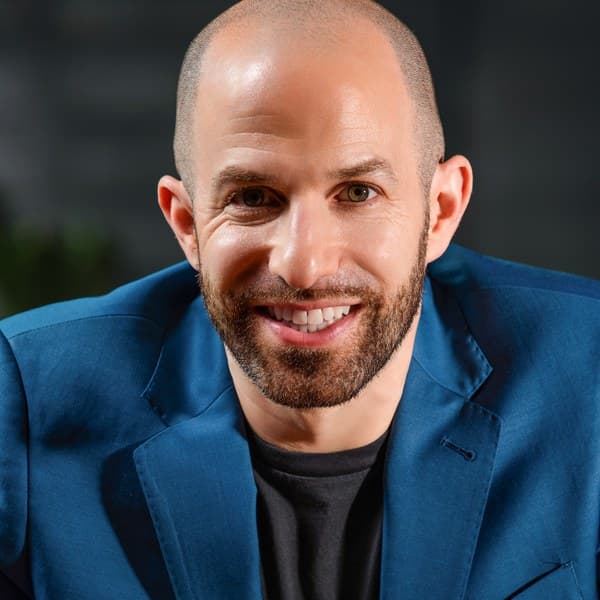
Ben was the 6th employee at Wildfire, the social-marketing startup that grew from pre-product to a $400M acquisition by Google. He went on to co-found Color Farm Media and to found and operate the 501(c)(3) Color Farm Impact, and he serves on the board of The Moth.
The Twin School curriculum is not theory — it is Ben's own daily working method. He runs his life and his ventures from a personal digital twin he built himself, and he is an identical twin. The school is named for both.
Asked before you have to ask
The questions diligence teams ask first — answered from the business plan, in plain language.
The twin lives in the student's own Google Drive, under the student's own account, from day one — Twin School will never host or retain a copy. The plan commits to program-data minimization (only enrollment, attendance, milestones, and placement outcomes), plain-language consent written for 18–25-year-olds, and default opt-outs from model training wherever a tool offers one. Every cohort is adults (18+), and a named safeguarding lead is on staff from the first cohort.
We're raising $10–20M to teach the agentic era's skills to the people the last tech wave left behind.
The sequence starts with a $500K–$750K coalition wedge (months 1–5) that delivers pilot cohort 1 (~$270K), hires the founding team (~$250K), and stands up the org (~$75K) — reaching a pre-committed 6-month go/no-go checkpoint. Then a $2–5M multi-year anchor (months 5–9) funds the expansion to 3–5 sites and ~750 students over 3 years.
- Founder who helped build a startup acquired by Google for $400M (6th employee at Wildfire).
- Deep, current AI-agent practice — this curriculum is the founder's own working method.
- A proven nonprofit operator via Color Farm Impact.
- A fundable wedge: mid-size coalition grants fund the pilot before anchor funders scale it.
The one-pager, deck, business plan, and curriculum are ready to share.